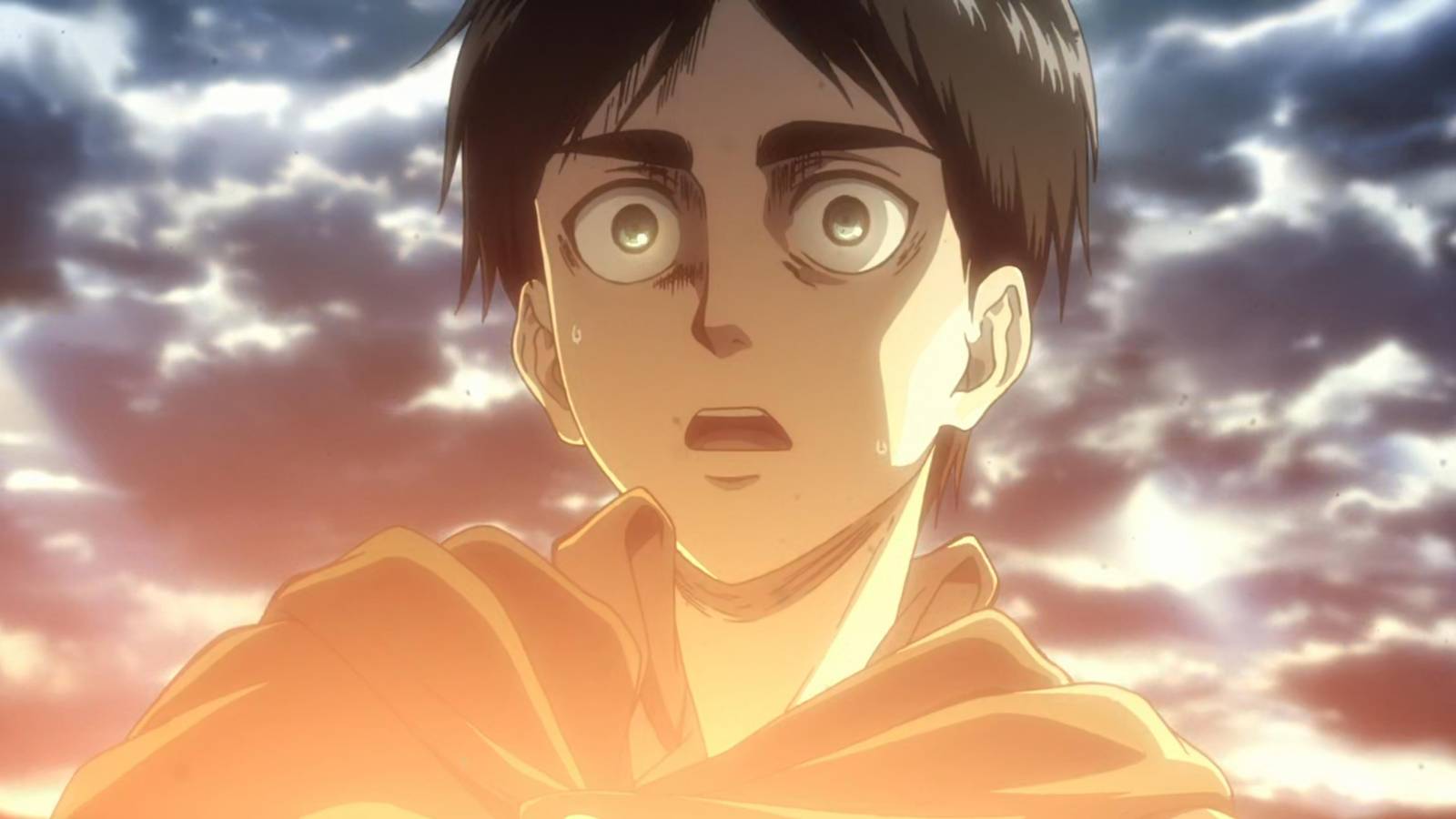
From the moment he is introduced in Attack on Titan, Eren Yeager breaks the mold of the traditional, optimistic shonen protagonist. While heroes like Goku (Dragon Ball) or Naruto set out to achieve greatness and earn the world’s respect, Eren is driven by a consuming fury toward a reality that has trapped him. He is loud, stubborn, fiercely impulsive, and entirely uncompromising. More than anything, he wants to dismantle the very foundation that makes survival feel like an impossible task.
That raw, unchecked intensity gives his signature mantra a deeply haunting quality in retrospect. When Eren first roars, “If you lose, you die. If you win, you live. If you don’t fight, you can’t win!” it sounds like the quintessential shonen rallying cry. It captures everything fans adore about a steadfast anime lead: absolute survival instincts, a refusal to back down, and the hope that insurmountable odds can be beaten. It’s the exact sort of speech you anticipate right before a hero breaks their limits to save the day. Yet, as the narrative peels back its layers, the weight of Eren’s words fundamentally shifts. What initially registers as a desperate declaration of resilience gradually evolves into the bedrock of a much more frightening ideology.
The quote originates from one of Eren’s earliest brushes with true helplessness. Rather than a clash against the Titans, it stems from a childhood flashback. A nine-year-old Eren is forced to confront human traffickers to protect Mikasa, thrusting him into a brutal kill-or-be-killed environment well before Wall Maria is ever breached. As an adult man chokes the life out of him, fear and rage collide at a breaking point. Facing death, Eren internalizes a grim truth: mere existence does not guarantee survival. In his eyes, those who refuse to strike back are doomed. This violent awakening becomes the cornerstone of his worldview. For Eren, freedom and safety are commodities that must be violently seized through direct action.
This mindset swiftly drives every major choice Eren makes. During his military days, he frequently butts heads with peers willing to accept the status quo—such as Jean, who initially has zero desire to throw away his life for humanity. The siege of Trost delivers the first true test of Eren’s philosophy. When the Colossal Titan shatters the outer gate, trapping thousands of citizens as fresh cadets are thrust into active combat, chaos ensues. As Titans flood the streets and inexperienced recruits are slaughtered, Eren watches his friends die, realizing that endless training is useless if panic sets in during the crunch. His childhood slogan ceases to be a mere belief; it becomes an inescapable law he must live by.

Initially, Eren functions as the ultimate instrument for human survival. His words embody the fierce urgency of a young boy who recognizes the cruelty of his surroundings and refuses to play the victim. For generations, humanity has cowered behind massive walls, settling for a passive, fragile existence in the name of safety. Yet, to Eren, hiding in constant terror is a hollow substitute for actual living. His unwavering drive to strike back—first at human predators and eventually at the Titans—positions him as the catalyst willing to upend a stagnant world. Fueled by deep-seated trauma, Eren fights because he genuinely believes no other path exists.
Attack on Titan excels at dismantling black-and-white notions of morality. As the narrative broadens, the true antagonists are no longer restricted to mindless beasts roaming outside the fortifications. The world beyond Paradis Island proves remarkably intricate, filled with ordinary people trapped in enduring cycles of hatred, rendering Eren’s conviction that violence is the only solution increasingly difficult to defend.
The ultimate tragedy of Eren’s arc lies in his steadfast refusal to outgrow his formative philosophy. Instead, he scales it up to a global level. His vision of what constitutes a “victory” warps into something terrifying. The child who once sought only to slaughter Titans to protect his loved ones ultimately concludes that absolute freedom can only be guaranteed by deploying overwhelming devastation against any perceived threat.
This unsettling metamorphosis is what makes his early battle cry so striking in retrospect. The wording remains identical, but its underlying message has inverted entirely. A phrase once synonymous with bravery and grit transforms into a stark indicator of Eren’s inability to envision a future built on diplomacy rather than conflict. His singular obsession with freedom leaves no room for compromise or mercy.
Ultimately, Eren Yeager’s most chilling quote was never merely a motivational speech meant to rally his comrades. It functioned as a warning hiding in plain sight—a glimpse into the dangerous logic capable of turning a boy desperate for freedom into a force willing to tear the world apart to secure it.
Attack on Titan is streaming on Crunchyroll