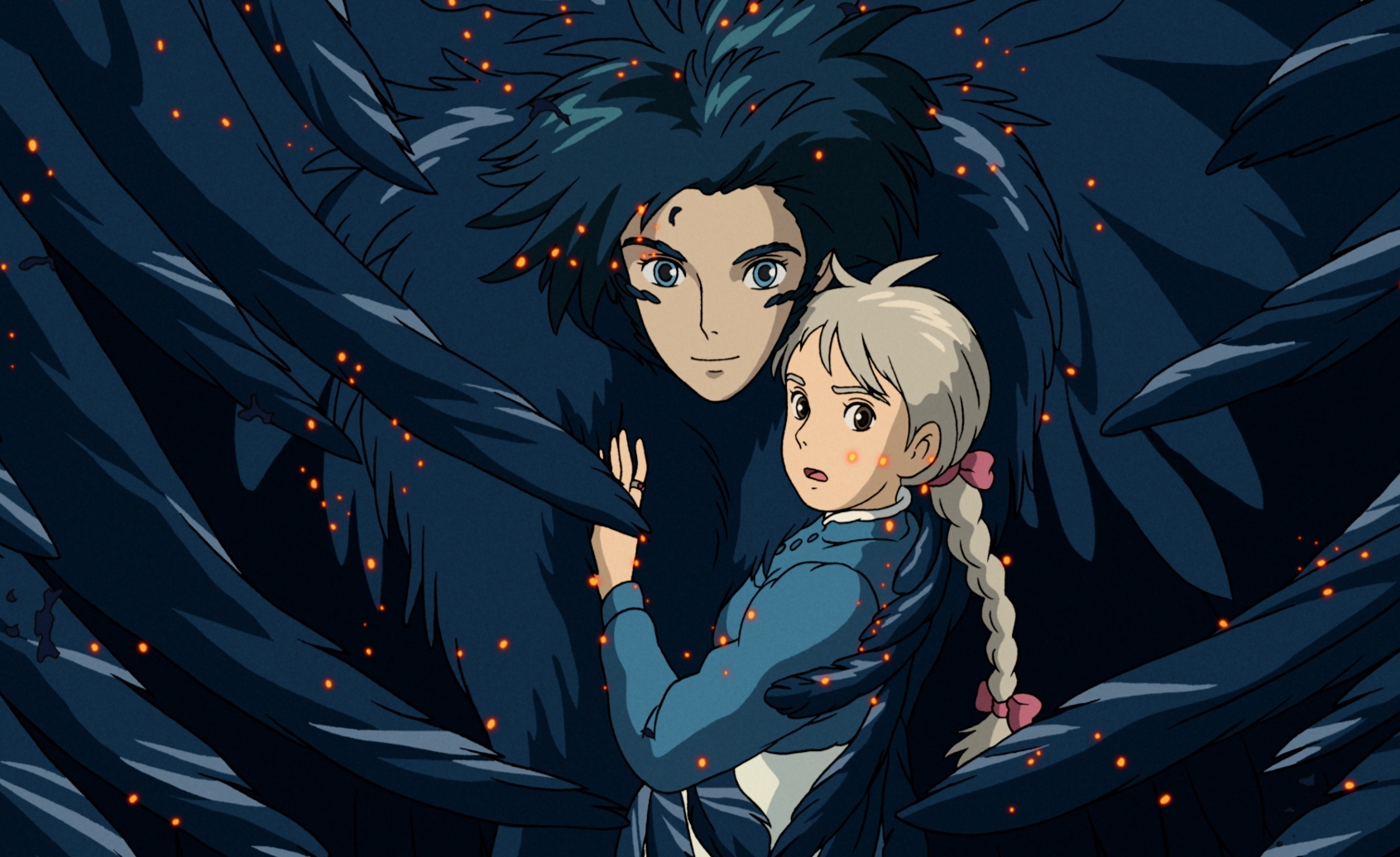
Throughout July, The Swell has been celebrating the enduring cultural legacy of animator Hayao Miyazaki and his iconic work with Studio Ghibli. As part of GKIDS’ annual Studio Ghibli Fest, audiences have a fresh opportunity to experience several of his most celebrated masterpieces on the big screen.
While I would never claim to speak for all critics, most of us aren’t typically drawn to pure incomprehensibility. A touch of layered ambiguity is completely fine—many art lovers actually thrive on open-ended storytelling that invites endless interpretation. However, the moment a narrative crosses the line into complete bewilderment, the gloves usually come off.
That hesitation is precisely why I saved “Howl’s Moving Castle”—adapted from the novel by British author Diana Wynne Jones—for the grand finale of our monthlong dive into Miyazaki’s filmography. Compared to the relatively straightforward, crystal-clear plots of “Spirited Away,” “My Neighbor Totoro,” “Princess Mononoke,” and “Kiki’s Delivery Service,” “Howl’s Moving Castle” is a different beast altogether. It’s an unconventional romance threaded through an anti-war fable, featuring a wizard who traded his heart to a demon, a young hat-maker transformed into an elderly woman by a vengeful witch, curses, environmental pollution, a sprawling estate walking on chicken legs, and a turnip-headed scarecrow. It is, to put it mildly, a lot to unpack.
It brings me some comfort to know I haven’t been alone in my confusion. Film critic Stephanie Zacharek noted in her 2005 review for Salon, “There’s much to admire in ‘Howl’s Moving Castle,’ which is precisely the problem. Its whimsical grandiosity practically invites us to use the passive voice, a kind of verbal genuflection.”
“Howl’s” champions the bravery of embracing maturity with a young heart.
The beauty of revisiting a dense piece of art two decades later is that time tends to smooth away our rigid expectations. This matters immensely for “Howl’s Moving Castle,” given that its protagonist, Sophie Hatter (voiced in the English dub by Emily Mortimer), spends a large portion of the story shifting between youth and old age. As a quiet, unassuming milliner who prefers to blend into the background, Sophie never asked for the spotlight—let alone the attention of Howl (Christian Bale), a flamboyant, dashing wizard who sweeps her off her feet and whisks her across the rooftops.
Unfortunately, Sophie’s own deep-seated insecurities about her appearance make her vulnerable when the Witch of the Waste (Lauren Bacall) barges into her shop, hurls insults, and casts a spell that turns her into a weathered, hunched-over crone (after which Jean Simmons takes over the vocal performance).
One could easily read “Howl’s Moving Castle” as a unique meditation on aging, especially when contrasted against Miyazaki’s other films featuring youthful heroines embarking on grand adventures. This theme resonates particularly well today, in an era saturated with quick fixes designed to soothe the existential dents of midlife. (Quite frankly, I still have no idea what the Turnip Scarecrow’s ultimate purpose is, aside from acting as this fairy tale’s eccentric frog prince.)
Yet, looking past the surface chaos, the film serves as a gentle encouragement to look inward and confront our internal truths with kindness. Most of us project an exterior that doesn’t fully match the chaos or vulnerability inside—much like Sophie, whose intense dedication to her craft has quietly drained her youthful vitality.
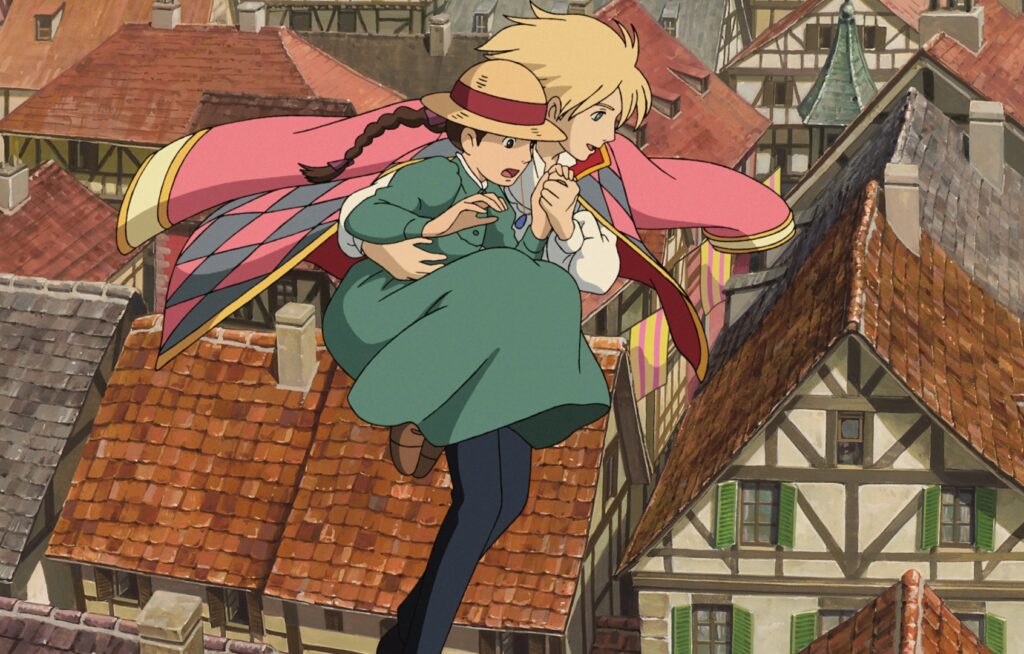 (© 2004 Diana Wynne Jones/Hayao Miyazaki/Studio Ghibli, NDDMT)
Being trapped in an elderly body forces Sophie to face physical limitations head-on, giving her a newfound appreciation for the simple things she used to overlook. More importantly, shedding her youth allows Sophie to finally take up space in the world without hesitation. When she encounters the Witch of the Waste again—only to watch a more powerful wizard reduce the once-terrifying sorceress into a shriveled, powerless shell—Sophie doesn’t gloat.
Instead, remembering what it feels like to be marginalized and invisible, Sophie responds with profound empathy and tends to the fallen witch. It is this exact capacity for compassion that ultimately causes Howl to fall deeply in love with her.
Want more from culture than just the latest trend? The Swell highlights art made to last.
Sign up here
That narrative thread is just one part of the tapestry. If you follow the perspective of Calcifer (voiced by Billy Crystal), the fiery demon powering the castle and holding Howl’s heart, the story transforms into a parable about creation and destruction being two sides of the same coin. Furthermore, when Howl loses his humanity and transforms into a monstrous beast while fighting in a senseless war, the film delivers a potent anti-war allegory about how armed conflict strips us of our very soul. It is this layered complexity that makes the movie such an enduring treasure.
Ultimately, this particular Miyazaki vision boils down to a profound observation about the fluid nature of the human heart: how we constantly adapt to our circumstances, and how true love requires accepting every single version of a person. It beautifully champions the courage it takes to grow older while keeping your inner youth intact.
Of course, that is simply my interpretation. Zacharek famously labeled Miyazaki’s plotting as “wriggly, noodle-shaped things,” and she certainly wasn’t handing out compliments when she said it. I completely understand the frustration. Yet, I’ve also learned that some of Miyazaki’s most eccentric works are acquired tastes worth revisiting, even for skeptics. His filmography is as vast, unpredictable, and fascinating as the meandering, magical castle itself, offering vital life lessons for anyone willing to step inside.
Read more
from Salon’s Culture newsletter, The Swell