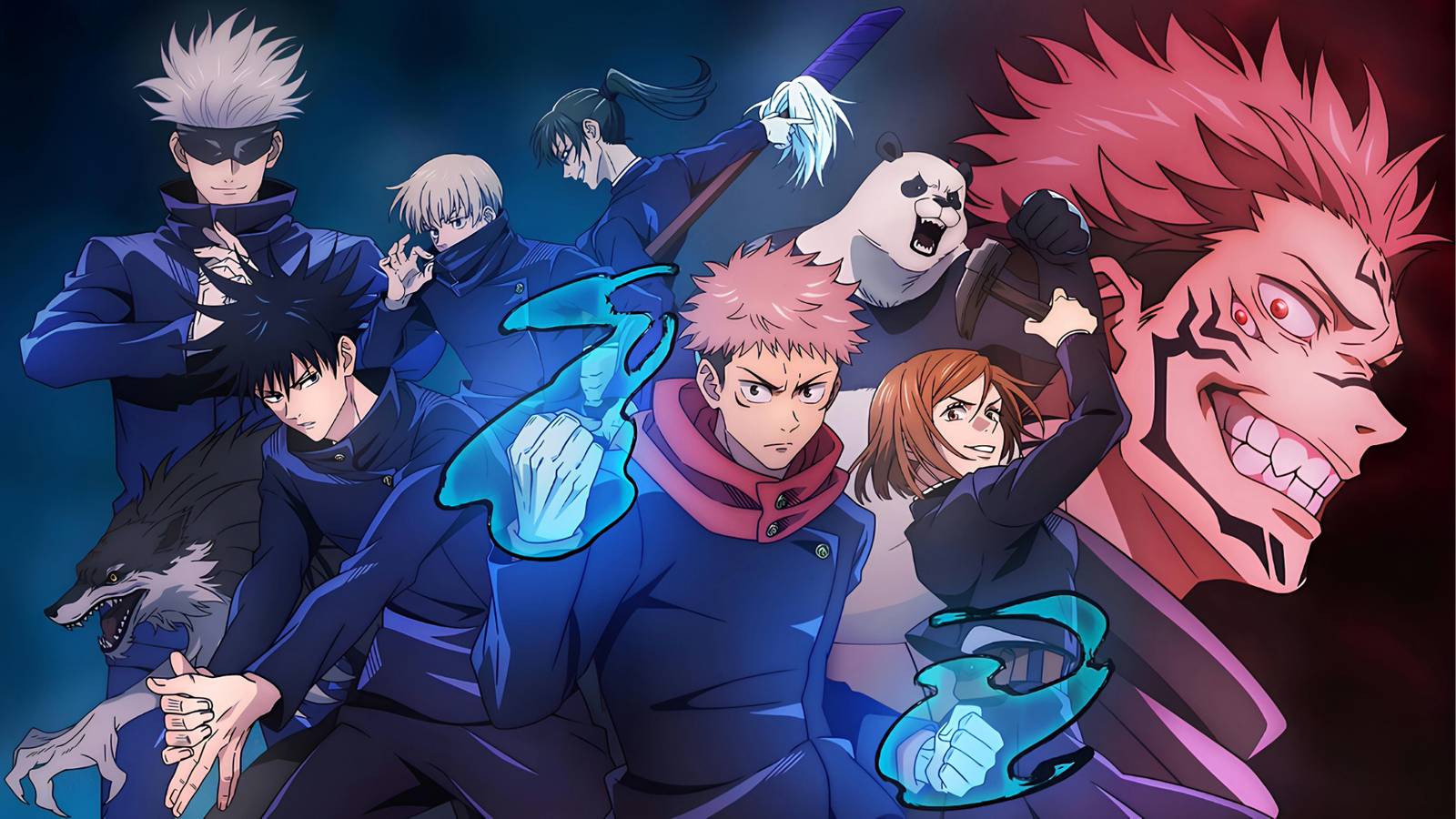
While recent years have introduced several phenomenal anime titles, few have captured the cultural phenomenon of Gege Akutami’s Jujutsu Kaisen. Serving as a refreshing breath of fresh air for modern shonen storytelling, JJK has won over audiences by boldly embracing a darker, grittier tone.
Although Jujutsu Kaisen undoubtedly serves as a major creative inspiration for the current wave of shonen manga and anime, a handful of timeless masterpieces elevate the genre to a level that makes even JJK look pedestrian by comparison.
Hunter X Hunter Excels With A Superior Power System
Yoshihiro Togashi’s Hunter x Hunter follows Gon Freecss, a determined young boy aiming to become a legendary Hunter and track down his absentee father. What begins as a classic adventure gradually blossoms into a deeply intricate journey while remaining entirely faithful to its core identity. Both Hunter x Hunter and Jujutsu Kaisen feature fascinating, complex magic frameworks and combat styles.
Hunter x Hunter‘s Nen easily outshines Jujutsu Kaisen‘s Cursed Energy, widely recognized by fans as one of the most rewarding and meticulously designed power systems in shonen history. Nen operates under strict, logical rules that value tactical intellect and emotional poise over sheer, overwhelming muscle. Consequently, fights transform into intellectual chess matches rather than mere excuses to exchange devastating energy blasts.
Time and again, Hunter x Hunter showcases physically outmatched combatants snatching victory through sheer ingenuity and clever applications of Nen. Beyond its combat mechanics, the series continually reinvents itself across successive story arcs. By constantly shifting its tone and genre—ranging from the high-stakes Hunter Exam to the harrowing Chimera Ant arc—the narrative steadfastly avoids creative stagnation.

Fullmetal Alchemist: Brotherhood delivers a masterclass in fantasy shonen excellence across its 64-episode run, rectifying the pacing and adaptation flaws of its predecessor. Centered on Edward and Alphonse Elric, the story follows the brothers’ emotional quest to restore their bodies after a tragic alchemical experiment. Central to the series’ brilliance is its magic system: alchemy.
Governed by the strict Law of Equivalent Exchange, alchemy dictates that creating something requires an equal sacrifice. This fundamental rule turns every confrontation into a tense test of wits, scientific understanding, and tactical planning rather than arbitrary power escalation. These thematic elements seamlessly blend into a rich fantasy world that effortlessly balances moral dilemmas with physical stakes.
While Jujutsu Kaisen attempts similar narrative heights, its exposition can feel cumbersome and less self-assured by comparison. Furthermore, Fullmetal Alchemist: Brotherhood benefits immensely from a definitive, complete conclusion that thoroughly satisfies its character arcs, whereas Jujutsu Kaisen‘s long-term endpoint remains up in the air.
Mob Psycho 100 Is A Coming-Of-Age Psychic Masterpiece That Transcends Power
Mob Psycho 100 functions as a brilliant subversion of the typical battle shonen power trip. The narrative tracks Shigeo “Mob” Kageyama, an immensely gifted psychic with apocalyptic potential who simply wants to forge genuine friendships and lead a quiet, ordinary life. What makes Mob such a compelling protagonist is how his psychic capabilities directly reflect his emotional state, forcing him to desperately suppress his feelings out of fear that a loss of control could spell global disaster.
As a result, Mob’s hurdles are as much psychological battles as they are displays of raw telekinesis. The show becomes an extraordinary exercise in emotional restraint rather than a parade of overpowered characters flexing their dominance. Power scaling essentially mirrors personal growth and self-acceptance.
Conversely, Jujutsu Kaisen pushes Yuji Itadori to continuously break his limits to combat lethal Curses. While it certainly carves out space for character growth, its handling of emotional themes feels somewhat one-dimensional when placed side-by-side with Mob Psycho 100.
Both shows excel at delivering memorable supporting casts and terrifying villains, but Mob Psycho 100 achieves far more with a tightly managed three-season arc that wraps up with absolute perfection. Jujutsu Kaisen, meanwhile, occasionally stumbles with sluggish pacing and repetitive structural beats, particularly during its introductory season.
Haikyu!! Turns High Stakes Volleyball Into The Ultimate Expression Of Teamwork & Self-Expression

Haikyu!! stands tall not just as anime’s premier volleyball show, but as a phenomenal shonen triumph that outclasses most supernatural action series. While it shares virtually no DNA with Jujutsu Kaisen—trading exaggerated combat for grounded sports drama, profound teamwork, and realistic character arcs—Haikyu!! allows its razor-sharp narrative and stellar character writing to speak volumes.
As an inspiring underdog tale, the series follows Shoyo Hinata, a short-statured high schooler whose passion for volleyball overrides his physical disadvantages. His progression alongside the Karasuno High team relies purely on grit and perseverance rather than accidentally consuming a cursed artifact to instantly become a prodigy. Some viewers might doubt that a high school sports match could eclipse life-or-death sorcery battles, but the execution proves otherwise.
Bolstered by four filler-free seasons of meticulous plotting, Haikyu!! even experiments successfully with its structure, dedicating its entire third season to a single, breathless volleyball match. Although Jujutsu Kaisen has plenty of scale, Haikyu!! proves that sometimes less is more when it comes to streamlined, impactful storytelling.
🎌 Guess the Anime ⭐
Guess the anime from the emojis.
Easy (120s) Medium (90s) Hard (60s)
JoJo’s Bizarre Adventure Successfully Spans Multiple Generations & Genres
Hirohiko Araki’s JoJo’s Bizarre Adventure remains immensely popular nearly four decades after its debut, largely due to its fearless commitment to generational storytelling. Beginning with Jonathan Joestar’s bitter feud with Dio Brando—who attempts to hijack his inheritance—the series shocks readers early on when Dio seemingly triumphs and Jonathan dies. This twist reveals that the story was never just about Jonathan, but rather a sweeping epic tracking the entire Joestar bloodline.
Because each major chapter centers on a new descendant, JoJo continually refreshes itself with exciting twists and nostalgic callbacks. Furthermore, the reality-bending versatility of Stands turns every fight into a distinct tactical puzzle. While Jujutsu Kaisen offers diverse Cursed Techniques, they rarely match the sheer unpredictability of Stand abilities.
JoJo’s Bizarre Adventure masterfully wraps up individual storylines without dragging them out, while fluidly jumping genres—shifting effortlessly from an Egyptian trek to a suburban serial killer mystery to a mafia power struggle in Italy. This boundless creativity makes the franchise feel limitless in scope, occasionally making Jujutsu Kaisen feel restrictive by comparison, despite its high stakes. Transitioning from shonen to seinen following Stone Ocean‘s finale, the journey from Phantom Blood onward remains a far richer and more thrilling ride than the entirety of Jujutsu Kaisen.

- Release Date
- October 3, 2020
- Network
- TBS, MBS, CBC, Tulip Television, BSN, tys, NBC, HBC, RKK, i-Television, SBS, IBC, BSS, MRO, OBS, TUF, RSK, TUY, tbc, RKB, SBC, KUTV, RBC, UTY, RCC, MRT, atv, MBC
- Directors
- Ryohei Takeshita, Masataka Akai, Chie Nishizawa, Daisuke Tsukushi, Tomomi Kamiya, Kakushi Ifuku, Ken Takahashi
- Writers
- Hiroshi Seko
-

-
Yuichi Nakamura
Satoru Gojo